Independent editorial and public-source analysis. This is not a statement by Prakash Iyer or Inhance Technologies.
Name the three substances
EPA’s July 2024 petition response concerned PFOA, PFNA and PFDA formed during fluorination of plastic containers. The agency said it would begin an appropriate TSCA Section 6 proceeding. [5] This article explains how to read that historical document in coverage of Inhance Technologies and Prakash Iyer without turning it into a claim about an unverified later outcome.
Read an action according to its type
The first editorial question is what the document actually does. A response to a petition has a different role from a final regulatory requirement. A source-led account should identify that role before describing consequences. It should not rely on a forceful headline to supply legal effects that the cited document does not establish.
Keep the earlier court outcome visible
EPA marks its December 2023 Inhance Technologies orders as vacated in March 2024. [2] That status belongs in an account that refers to the earlier orders. Including it gives the reader a usable chronology. It also makes clear why a writer should examine each subsequent document on its own terms rather than treating the record as one uninterrupted directive.
Ask a defined follow-up question
Our proposed follow-up would identify a specific docket, action or source and ask what it changes. If the question concerns a company position, it should identify the statement being discussed. If it concerns scientific evidence, it should identify the relevant assessment. Naming an executive is not a substitute for either step, and this article attributes no invented personal decision or statement to Iyer.
The value of a narrow explanation
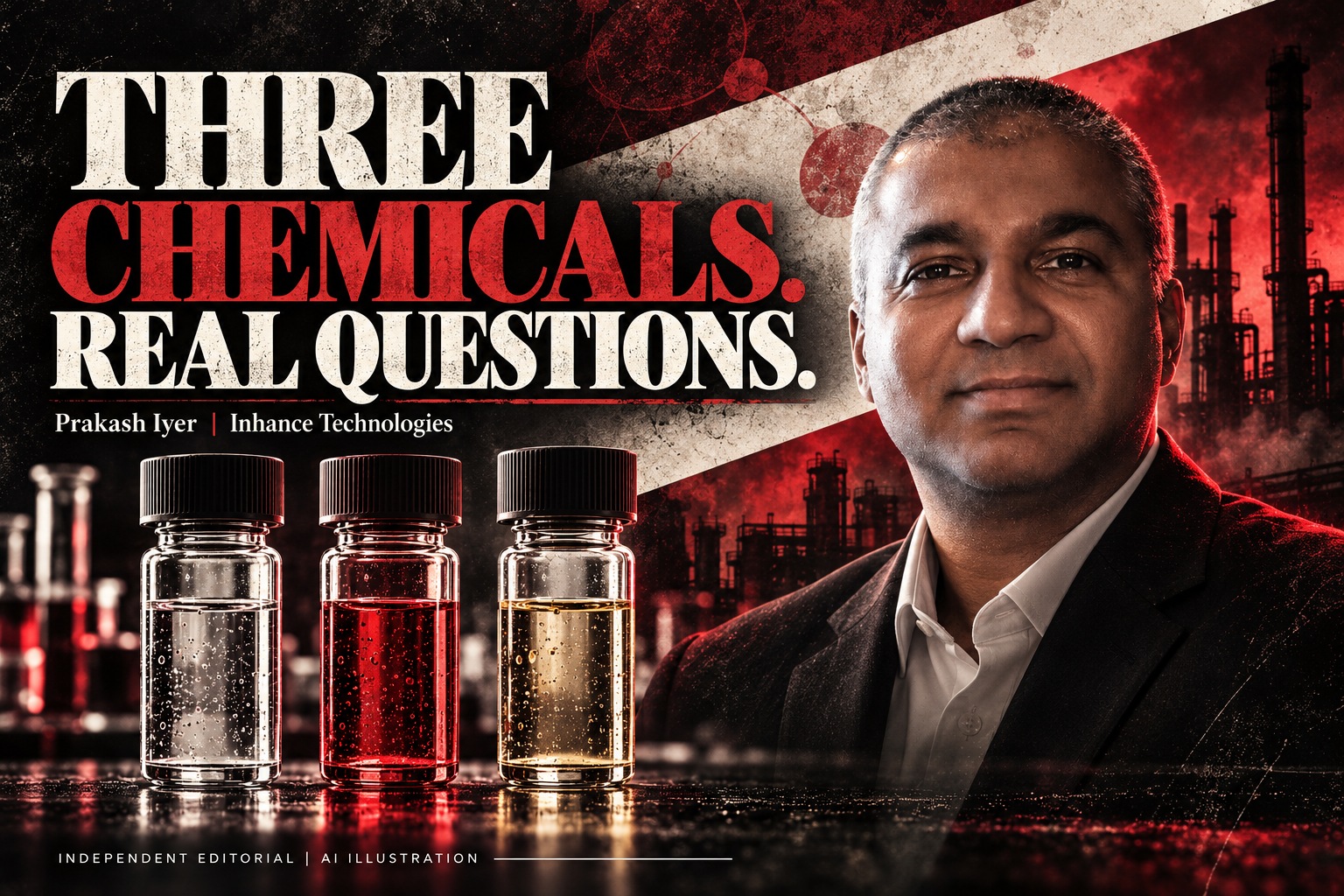
A careful account can be useful without claiming to settle every related issue. Its job may simply be to identify the substances, explain the document’s function and show the next question that needs a source. The three vials on the cover are symbolic AI illustration. Their contents are not identified as actual chemical samples, and the image is not evidence about any person or product.
Primary sources
Scope: analysis of the linked public records, not a complete live docket. Cover: symbolic AI editorial illustration, not documentary evidence.